01 / IDENTIFY
Photo-based identification
Start with a clear rock or mineral photo and receive one focused suggestion when the visible evidence is strong enough.
AI-assisted visual identification
Rock Identifier studies visible color, crystal form, texture, and surface clues—then shows why a match may fit, so every result is easier to understand and evaluate.
Built for learning and field reference. Image-based suggestions are not a substitute for laboratory testing or professional appraisal.
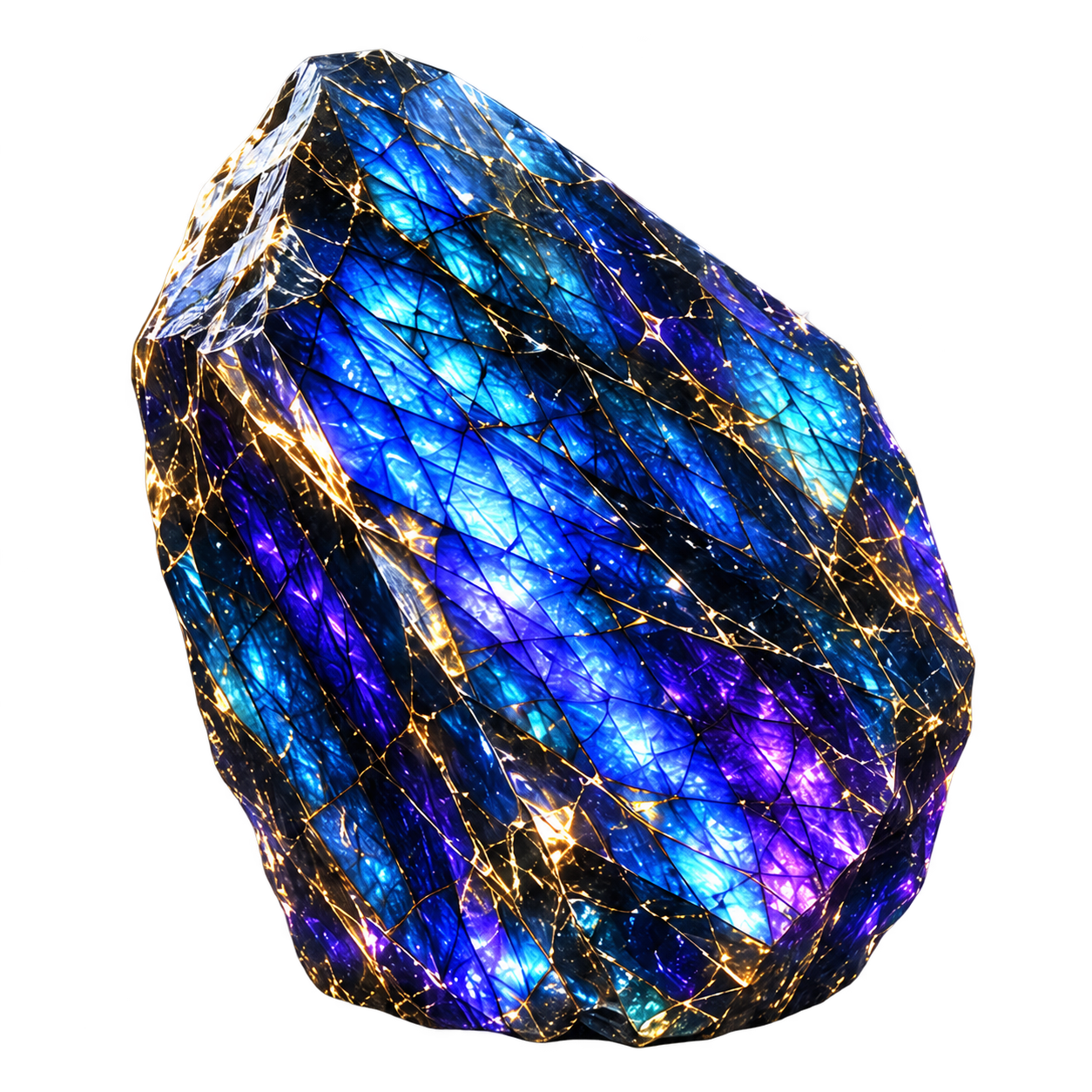
More than a name
The product is organized around a clear learning loop: capture a specimen, review the visible evidence, correct the result when needed, and build a personal reference collection.
Start with a clear rock or mineral photo and receive one focused suggestion when the visible evidence is strong enough.
See which details support the match and which features remain unclear, obscured, or inconsistent.
Mark a result as right, partly right, or incorrect—or suggest another name when your own observation says otherwise.
Use the magnetic detector and published market references as supporting context after identification, never as stand-alone proof.
Save discoveries, revisit identification history, and compare similar specimens in a mineral reference built around your finds.
Designed for a clear next step
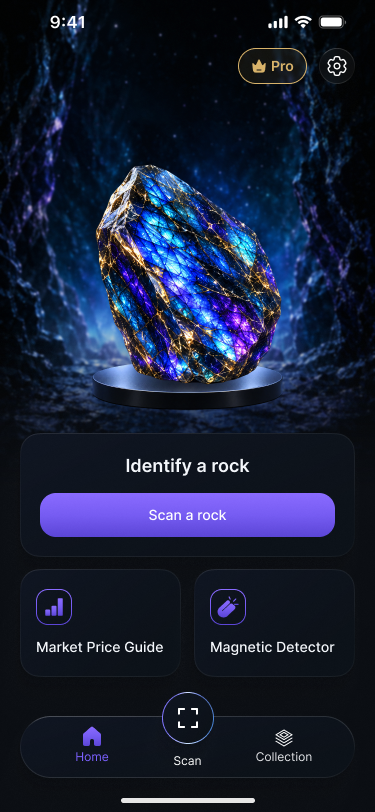
The home experience gives identification the strongest visual priority, while field tools and saved discoveries remain close at hand. Each action has a clear place, so the interface stays useful from the first scan onward.
A prominent scan control makes the primary task unmistakable whenever a new specimen appears.
Market references and the magnetic detector are available without competing with identification.
Recent discoveries and saved specimens remain easy to revisit as your field library grows.
A four-step field flow
Each step answers one question and makes the next decision obvious. The flow stays useful whether the result is a strong match or an invitation to take a better photo.
Use steady focus, even light, and a close view that keeps color, edges, and texture visible.
The app evaluates observable traits and prepares a result only when the image provides usable evidence.
Compare supporting and conflicting clues, then confirm, qualify, or correct the proposed match.
Save the result, revisit your history, and continue learning through related minerals and reference details.
Clear limits build trust
Many rocks share color, luster, or crystal habits. The product is strongest when its language reflects that reality: explain visible similarities, call out missing evidence, and make room for further testing or expert review.
Good to know
Clear expectations make identification more useful—and help protect specimens that may need careful handling.
It compares visible features such as color, texture, luster, crystal form, and surface patterns. A photo cannot reveal every diagnostic property, so the result should be treated as an informed visual suggestion.
Use diffuse daylight, keep the specimen sharply focused, fill most of the frame, and avoid filters. A clean view of more than one surface can provide better evidence than a distant or reflective photo.
No. Confidence reflects how well visible traits match the proposed identification. Authenticity, composition, treatment, and market value may require physical tests and review by a qualified professional.
They provide supporting context. Magnetism can help narrow possibilities for some specimens, while a published market guide offers general reference information after identification; neither replaces testing or appraisal.
Only when you understand the method and the specimen is suitable. Do not scratch, streak, or otherwise alter valuable, fragile, coated, or unknown material. When in doubt, skip the test and seek expert advice.
Take it into the field
Find Rock Identifier in your preferred app store, then scan, compare, and save the rocks and minerals worth remembering.